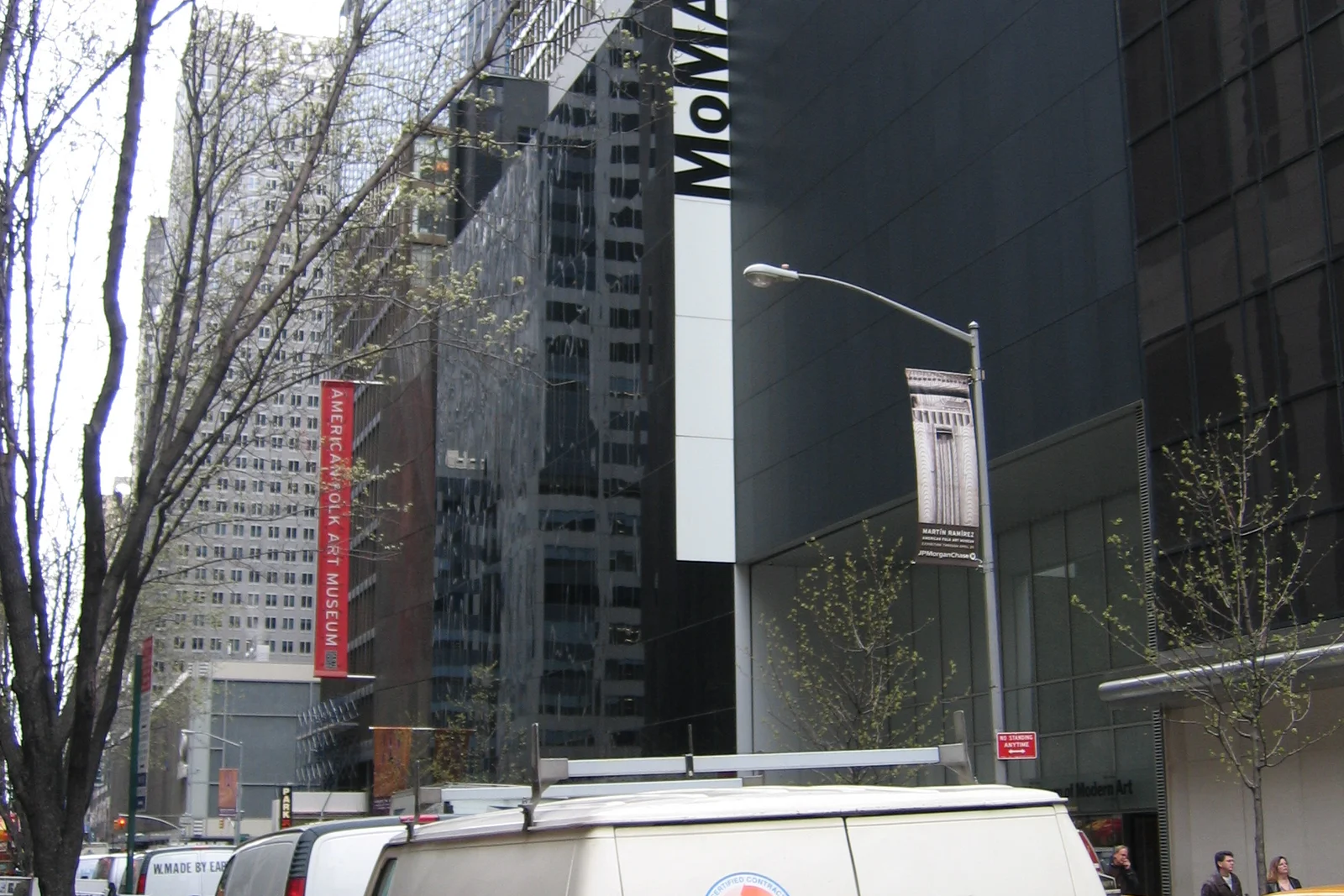
The highlights you came to see
The works are listed in the optimized route order. We recommend following the indicated sequence to minimize walking.
1 · 10 min
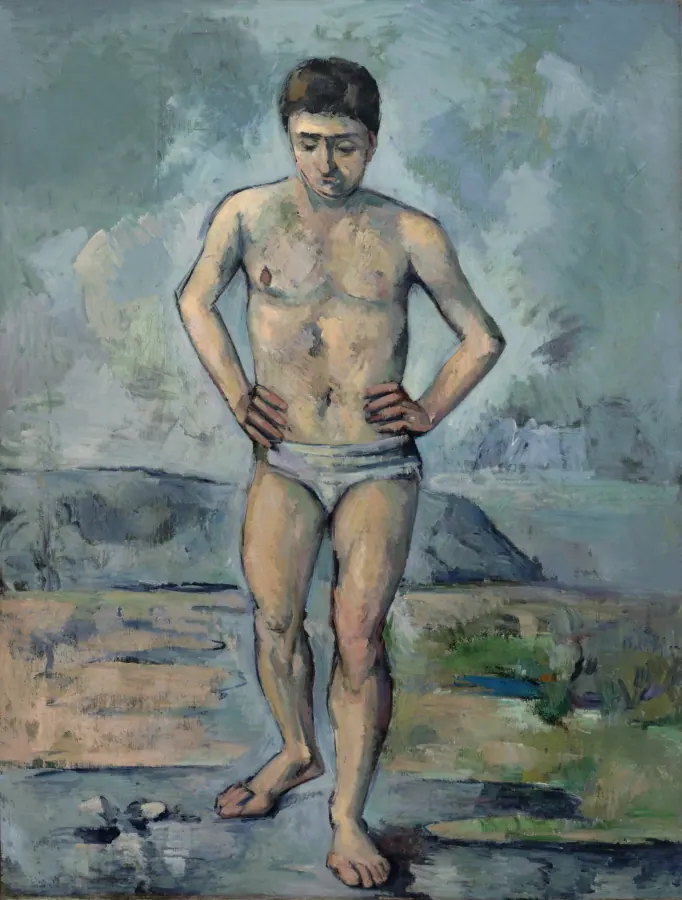
The Bather
Gallery 501, Floor 5, The Alfred H. Barr, Jr. Galleries
Cézanne rebuilds the standing figure through repeated, visible strokes and an uncertain relationship between body and landscape. The painting became an important precedent for artists who wanted to move beyond both academic finish and fleeting Impressionist vision.
2 · 10 min
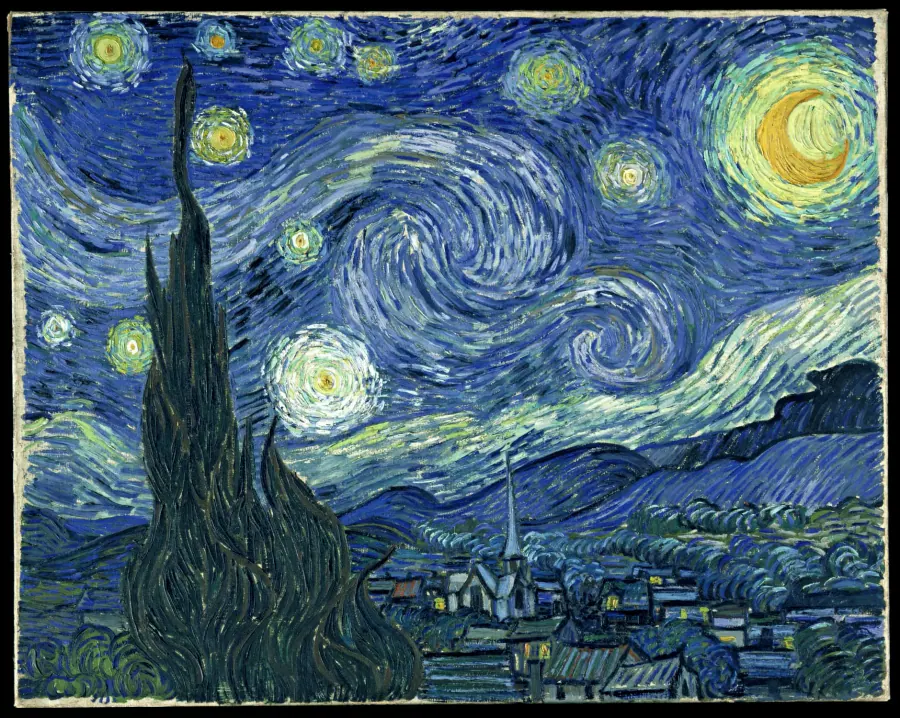
The Starry Night
Gallery 501, Floor 5, The Alfred H. Barr, Jr. Galleries
The Starry Night made observation, memory and invention inseparable. Van Gogh began from the landscape outside the Saint-Paul asylum, then altered village, cypress and sky until colour and brushwork carried an emotional force beyond literal appearance—a decisive model for expressive modern painting.
3 · 10 min
Les Demoiselles d’Avignon
Gallery 502, Floor 5, The Alfred H. Barr, Jr. Galleries
Picasso’s enormous canvas broke apart the unified body and stable room inherited from Renaissance painting. Its five sex workers confront rather than invite the viewer, while sharply different faces expose the artist’s appropriation of Iberian, African and Oceanic forms circulating through colonial collections.
4 · 10 min
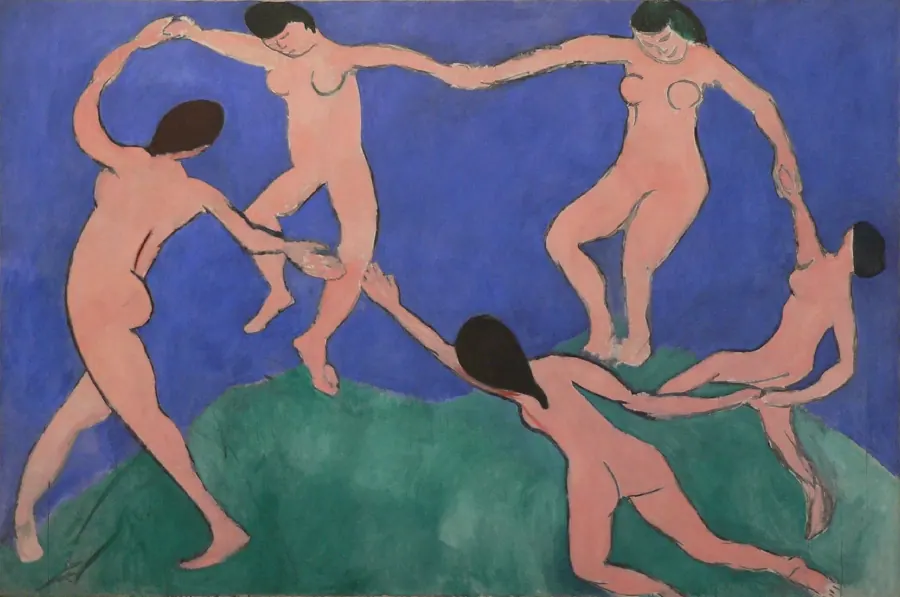
Dance (I)
Gallery 506, Floor 5, The Alfred H. Barr, Jr. Galleries
Dance (I) makes Matisse’s radical simplification immediately visible: five bodies, four principal colours and one continuous circular movement. It is both a complete painting and a working stage toward the larger Dance commissioned by Sergei Shchukin.
5 · 10 min
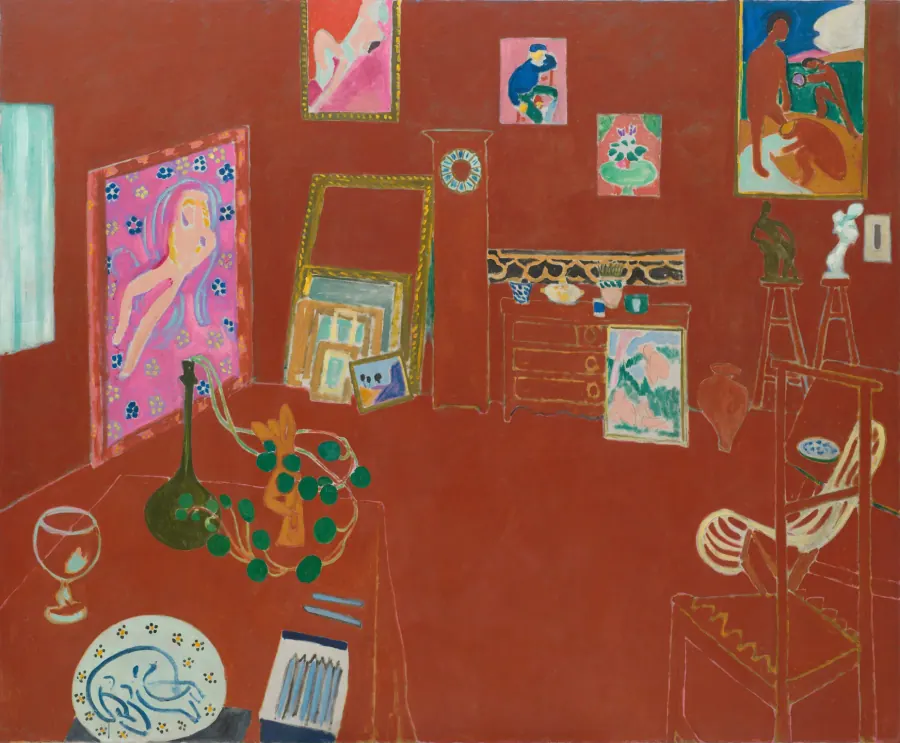
The Red Studio
Gallery 506, Floor 5, The Alfred H. Barr, Jr. Galleries
Matisse floods his studio with a single Venetian red that nearly erases ordinary depth. Furniture and architecture survive as thin gaps while paintings, sculptures and ceramics retain their colours, making the room less a physical record than a radical image of how an artist’s works inhabit memory and space.
6 · 10 min
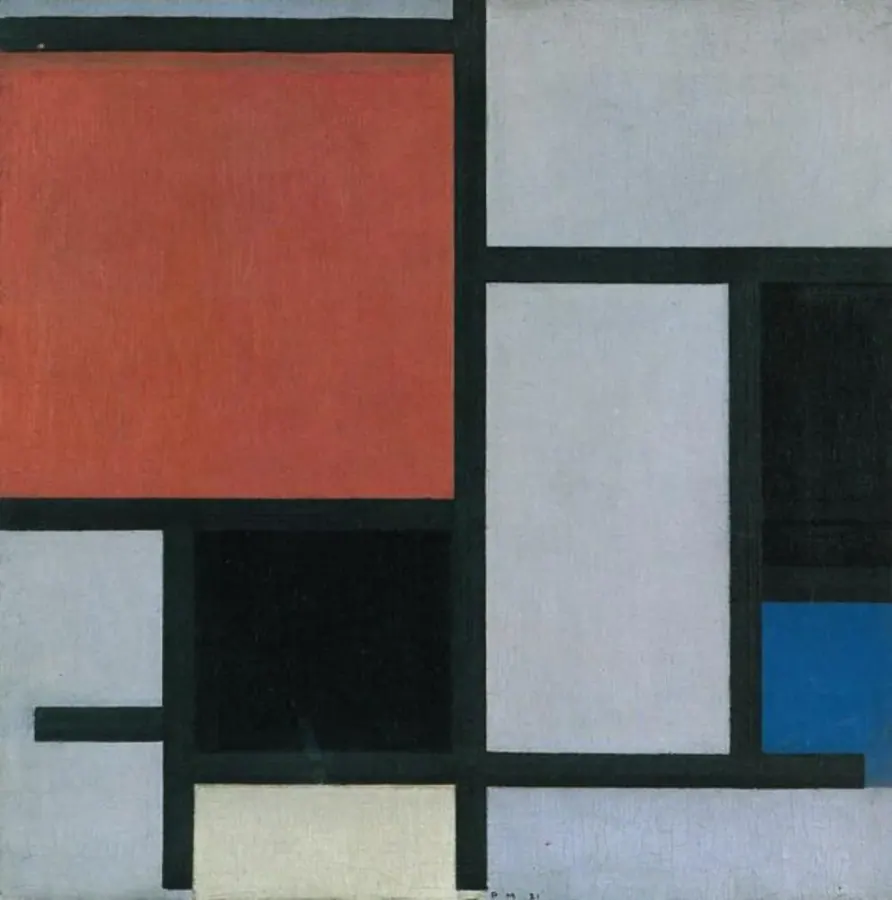
Composition with Red, Blue, Black, Yellow, and Gray
Gallery 513, Floor 5, The Alfred H. Barr, Jr. Galleries
This painting is a precise statement of Mondrian’s mature abstract language. Unequal rectangles, black lines and a restricted palette create equilibrium without symmetry, showing how few elements are needed to produce a highly active visual structure.
7 · 10 min
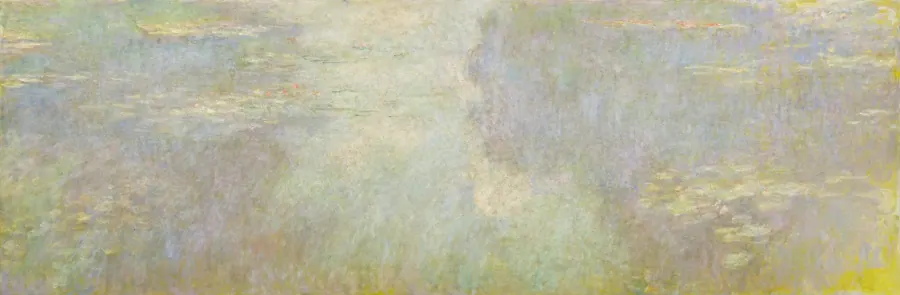
Water Lilies
Gallery 515, Floor 5, The Alfred H. Barr, Jr. Galleries
Monet’s mural-scale Water Lilies removes horizon and shore so that water, sky and reflected vegetation become one enveloping field. Built and revised over years, the painting links late Impressionism to the all-over scale and immersive viewing later associated with Abstract Expressionism.
8 · 10 min
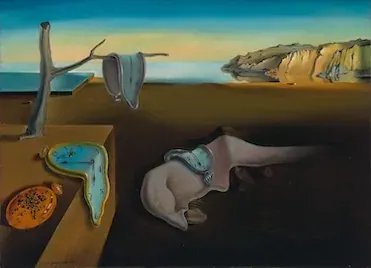
The Persistence of Memory
Gallery 517, Floor 5, The Alfred H. Barr, Jr. Galleries
Dalí uses painstaking illusion to make ordinary timekeeping collapse. Soft watches, ants and an unstable self-image inhabit a tiny, lucid landscape, fulfilling the Surrealist ambition to render dream logic with enough precision to undermine confidence in everyday reality.
9 · 10 min
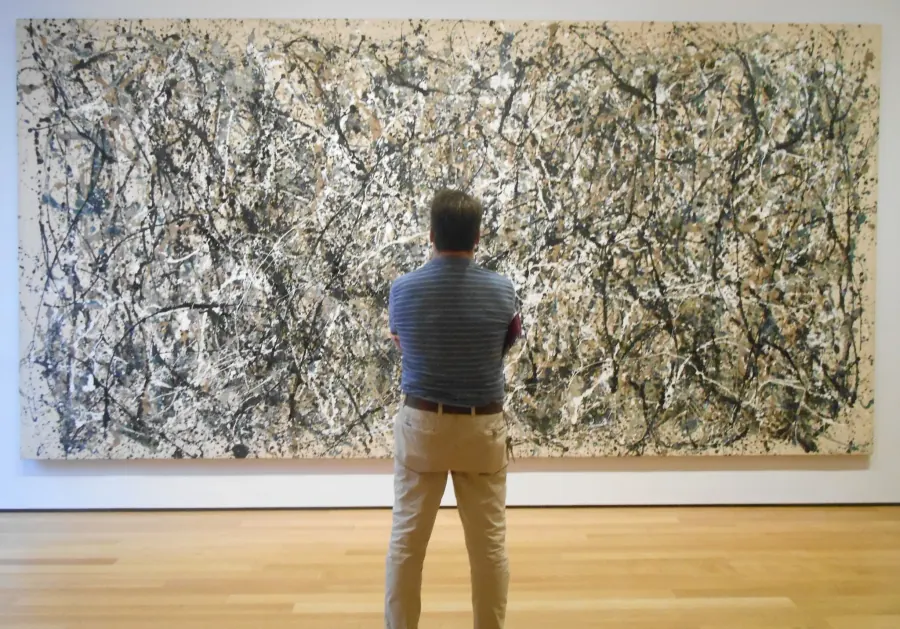
One: Number 31, 1950
Gallery 401, Floor 4, The David Geffen Galleries
One: Number 31, 1950 makes Pollock’s method inseparable from its immense scale. Poured and flung lines record gravity, momentum and movement around a canvas laid on the floor, yet their density sustains an underlying order rather than uncontrolled accident.
10 · 10 min
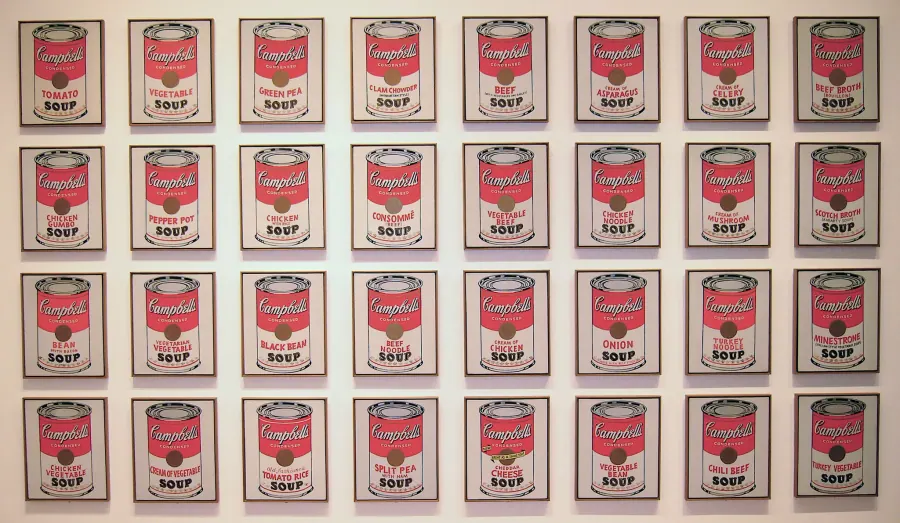
Campbell’s Soup Cans
Gallery 412, Floor 4, The David Geffen Wing
Warhol’s thirty-two canvases collapse the distance between painting and supermarket display. By repeating one familiar package while changing only the flavour label, the work challenges ideas of artistic originality, individual expression and the boundary between mass culture and museum art.
11 · 10 min
American People Series #20: Die
Gallery 420, Floor 4, The David Geffen Galleries
Ringgold’s mural-sized painting confronts racial and class conflict in the United States during the 1960s. Its scale, fractured movement and direct engagement with contemporary violence make it a central counterpoint to the abstract art surrounding it.
12 · 10 min
Self-Portrait with Cropped Hair
Gallery 3 North, Floor 3, The Philip Johnson Galleries
Kahlo turns self-portraiture into a declaration about identity, separation and autonomy. Painted after her divorce from Diego Rivera, the work uses clothing, cut hair and an unwavering gaze to resist a single fixed reading of gender or selfhood.
2 HOURS · 10 LANGUAGES · OFFLINE
Everything you need for a focused visit
Follow a curated route
Listen to the audio guide
Read descriptions in your language
Audio guide in your language
Works fully offline
Free to use
Available in 10 languages
How it works
- 1Download the guide
- 2Choose your language
- 3Keep track of your progress
- 4Start the 2-hour tour
- 5Follow each stop
- 6Listen and read in your language
NO SIGNAL? NO PROBLEM.
Works completely offline
After purchase, download the audio guide language you need. The route, written descriptions, progress and badges stay available inside the museum.
Frequently asked questions
Is the app free?
Yes. The app is free to download and use for the route and written guide. The audio guide is available as a one-time in-app purchase for 2.99 EUR.
Does it work offline?
Yes. The written guide stays available offline after installation. Audio can be downloaded by language after the 2.99 EUR in-app purchase.
Is it an official museum app?
No. This is an independently created visitor guide and is not affiliated with, endorsed by or sponsored by the museum unless explicitly stated.
How long does the tour take?
The curated route is designed to cover the essential highlights in about two hours, although you can pause or spend longer at any stop.
Do I need internet inside the museum?
No. The content needed for the visit is available offline, so poor reception or unavailable museum Wi-Fi will not interrupt the tour.
Does the app include audio?
Yes. Every stop can include audio. The written guide is free, while audio playback is unlocked with the 2.99 EUR in-app purchase.
Are descriptions and audio available in my language?
Yes. The written descriptions use the language selected in the app. After purchase, you can download the audio guide in any supported language.
Which languages are supported?
The guide supports English, Italian, French, Spanish, German, Portuguese, Dutch, Japanese, Chinese and Korean, including both text and audio.
Museum of Modern Art
Ready to see the highlights?
Descriptions and audio guide in your language.